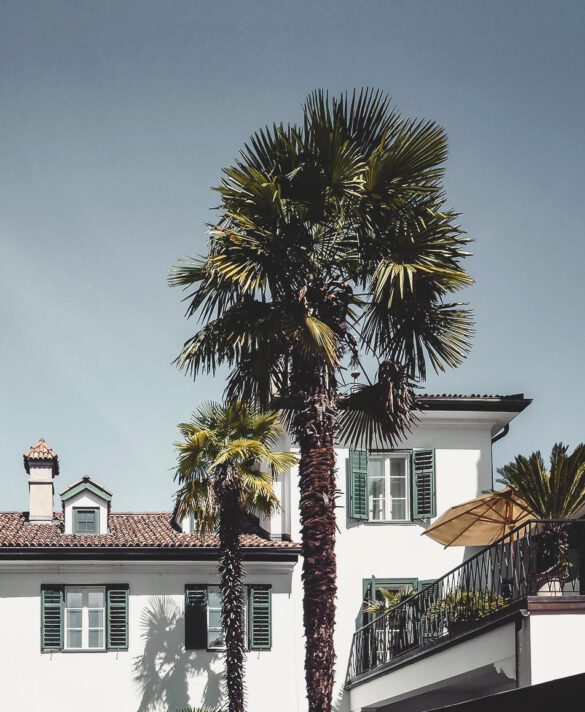
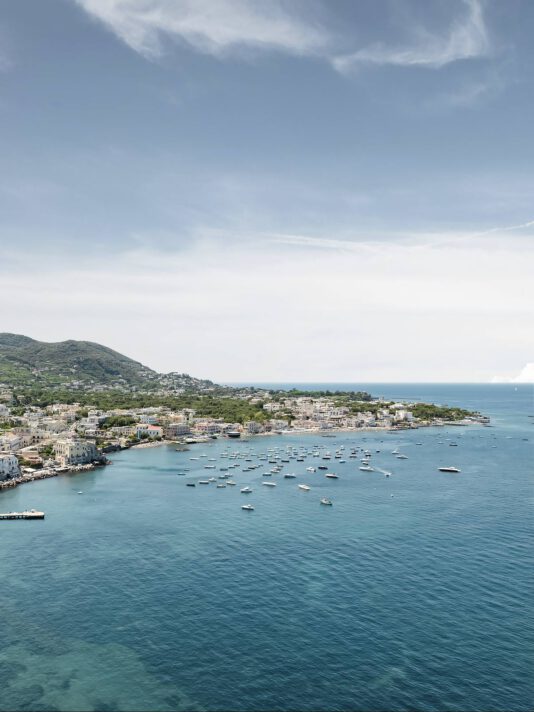
To reach this singular gem, you start with a leisurely ferry ride from Naples to Ischia. It takes about an hour, long enough to watch the city recede and the Mediterranean come alive through the salt-streaked windows. Soon the island appears: lush and green, dotted with white houses, with boats bobbing in water that shimmers between blue and emerald.
Ischia is everything Capri is not. Where Capri is polished and exclusive, Ischia is colorful, eccentric, and wonderfully unpretentious.
A taxi winds through narrow streets to the causeway leading to the Castello Aragonese. At a checkpoint, a museum guard asks your business; show your reservation, and you are waved through. Take the elevator, then walk a short way uphill through stone alleys until you find a small doorbell.
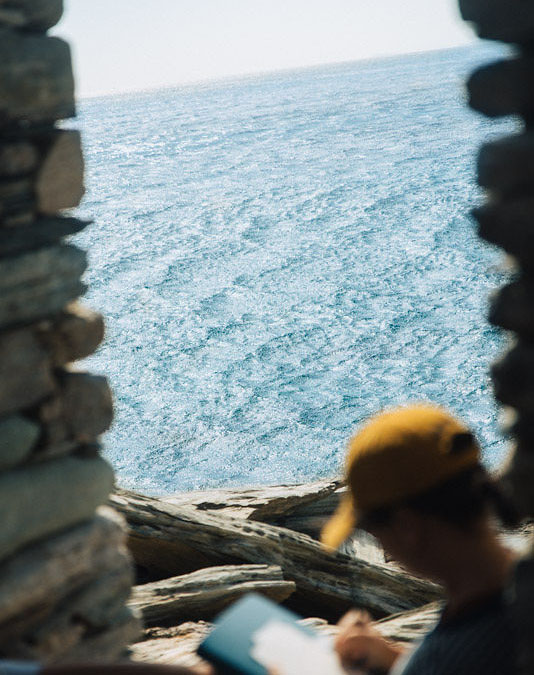
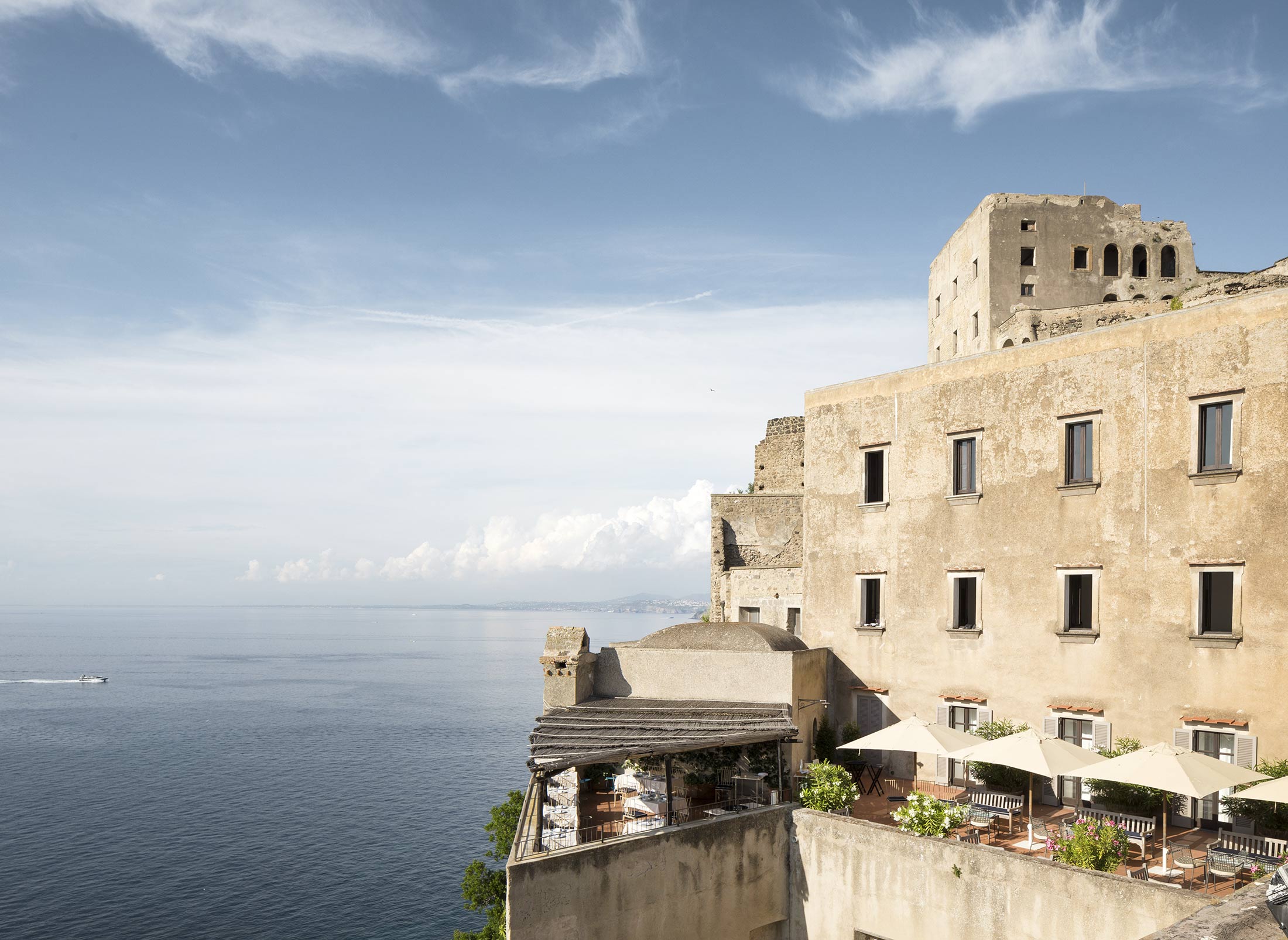
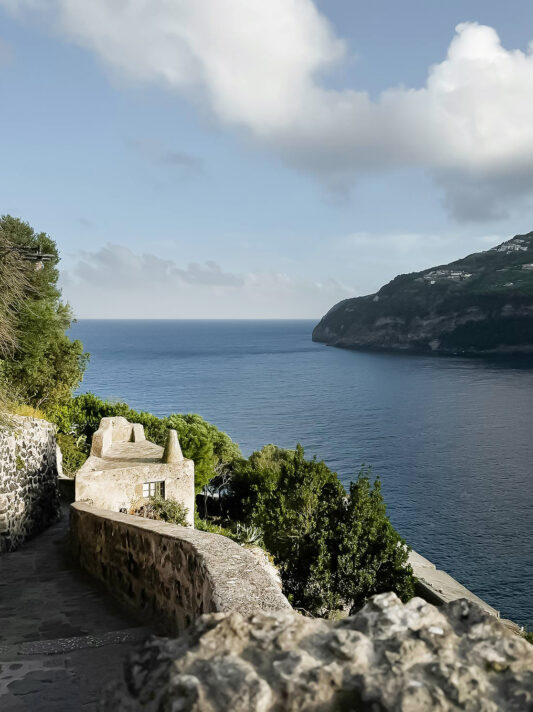
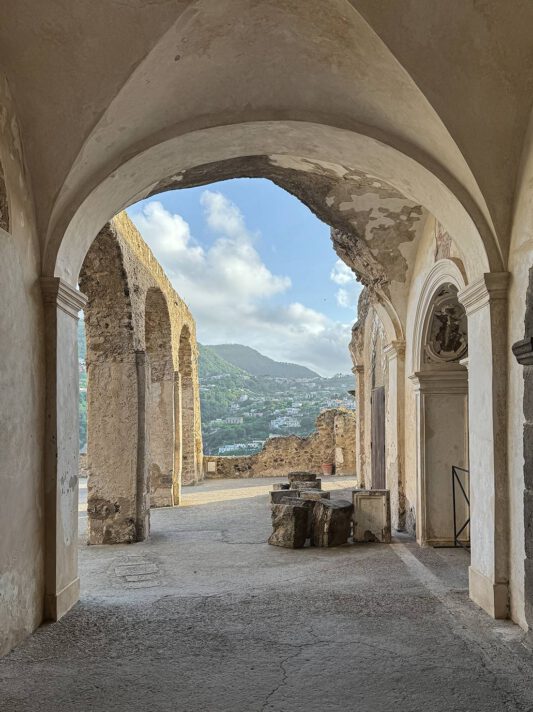
At the top, you are not just arriving; you are stepping into something almost sacred. The Castello Aragonese is part fortress, part monastery, with centuries-old walls and timeworn passages leading to echoing halls steeped in history. The sea has left its mark, in the salt-crusted stone and in the air. Its history goes back to 474 B.C., when Hiero I of Syracuse built a first fortified settlement on the rock.
By day, these alleys hum with visitors who come for the history. But ring the bell, and you leave the world behind: Beyond lies a private sanctuary, a quiet, artful retreat suspended between sea and sky.
A place like no other.
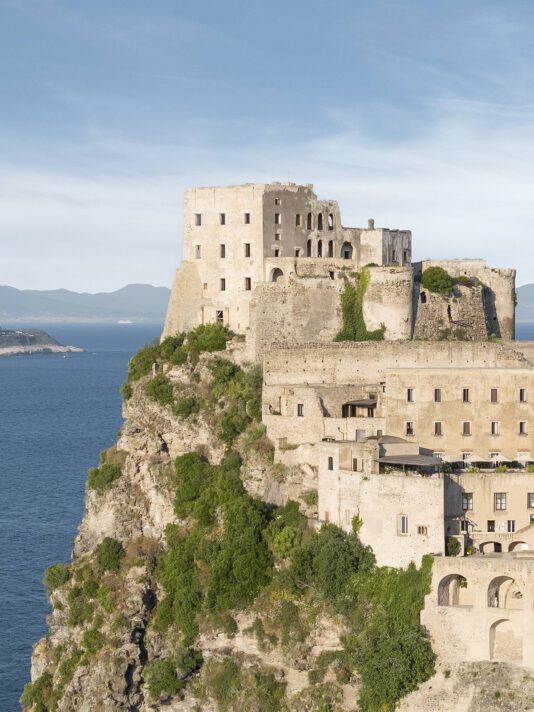
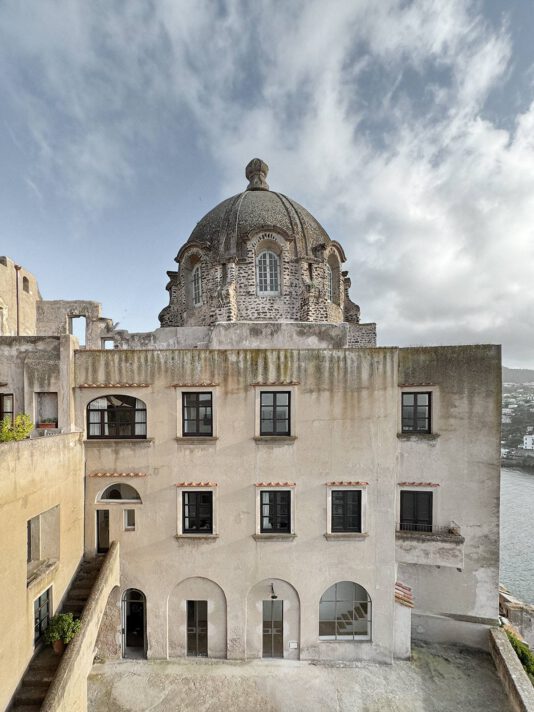
From the 16th century on, Poor Clare nuns lived in the fortress under austere rules. By the early 20th century, it had fallen into ruin, and in 1911 the local lawyer Nicola Ernesto Mattera bought it from the state for 25,000 lire, followed in 1913 by the surrounding land. (A small side note: He wasn’t rich and went into debt for it, but he had a vision that something here had to be saved.)
More than a century later, the castle is still owned by the Mattera family, who are determined to preserve its legacy, and its extraordinary views, for generations of guests to come.
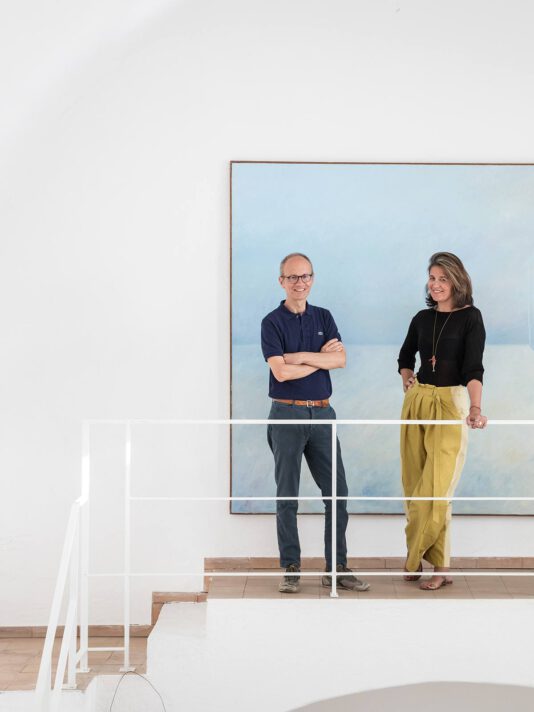
In the late afternoon, we meet Cristina and her brother Nicola, who run the hotel today. They live on the islet themselves, quietly looking after this immense heritage site. Their mother was German, which explains their fluent German and their worldly outlook.
What can we say? Il Monastero is one of those places that defy definition. It doesn’t feel like a hotel in the traditional sense, it isn’t a commercial venture and it certainly doesn’t follow hospitality trends. To spend a night here is to live in a monument, perched on a rock off one of Italy’s most beautiful islands.
“Every renovation here is a massive effort,” Nicola says. “Everything has to be carried up by hand.” If an umbrella breaks, someone has to haul a new one to the top. There are no roads and no cars, just the sea, the stone and the silence.
Above all, this place has style: not the flashy kind of the grand hotels of Amalfi, Positano or Capri, but something quieter and more refined. Everything is of high quality, thoughtfully chosen and understated.
On our second afternoon, we sat in the garden, lemon trees at our backs, the estate’s own grapevines just ahead, marveling at the silence – and the sea.
Of course, in high summer, the bay below fills with boats and the streets of the town thrum with vacation crowds. “August is madness on the island,” Cristina says. She would rather not leave the castle at all then.
But those lucky enough to secure one of the 20 rooms find themselves in a sanctuary. In the morning, some guests take the elevator down for a quick swim in the sea. Cristina does it every day. Hard to beat.
The Rooms
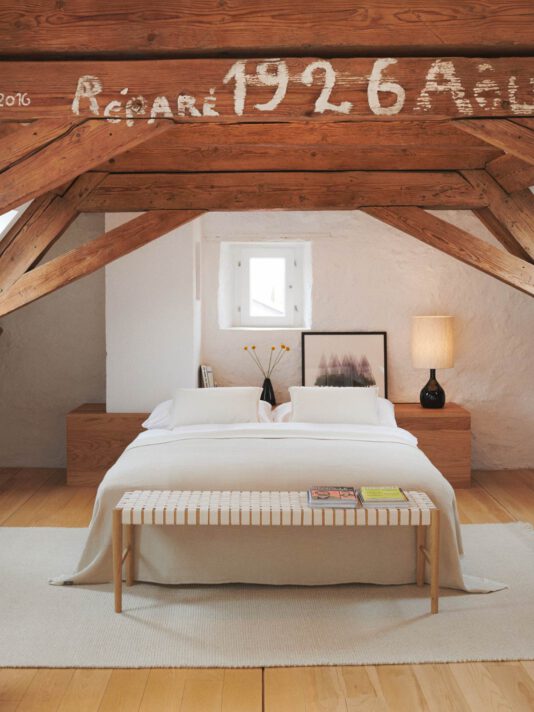
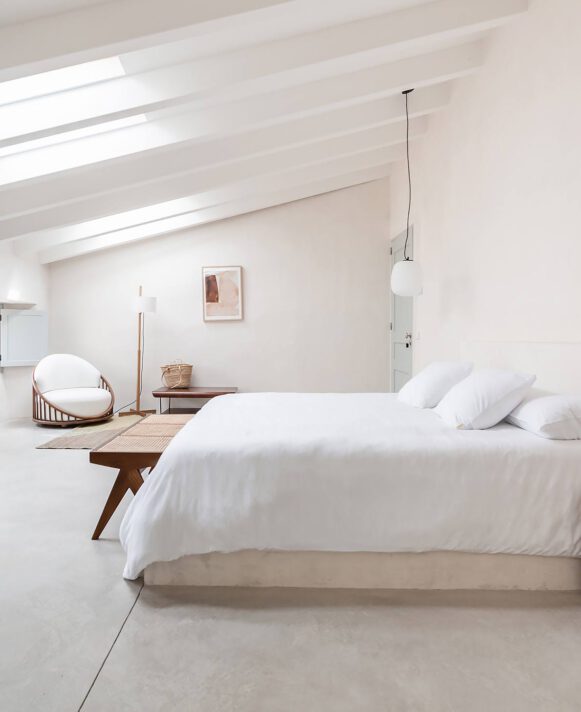
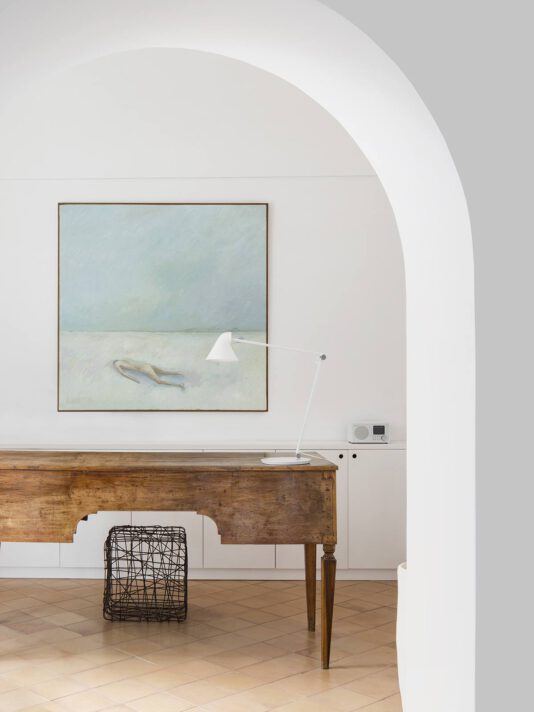
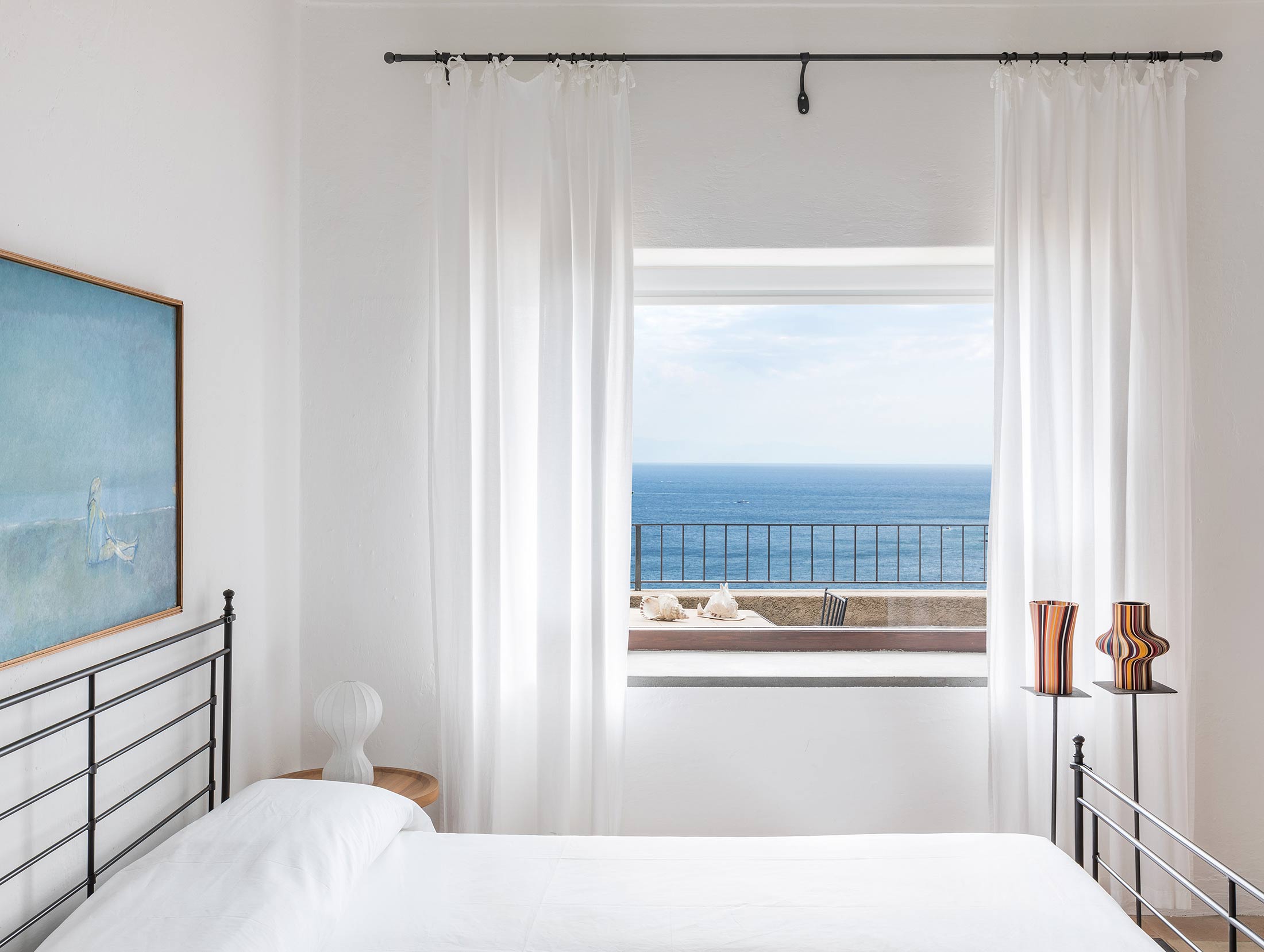
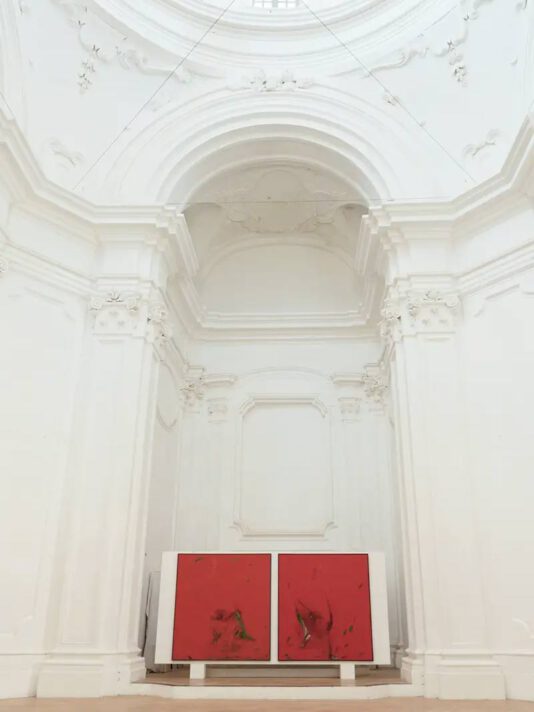
We spent one night in Suite No. 8 and another in a “standard” double. The suite, of course, is a showstopper. It is simply furnished, but its walls are hung with original works by Gabriele Mattera, Cristina and Nicola’s father, whose bold, evocative paintings are deeply tied to the island and now considered priceless. Outside the window is a large balcony, and beyond it the open sea. There are few hotel rooms we would choose over this one.
Still, it is important to know that this is not a place of overt luxury. The standard rooms in particular are small and very simply furnished, and the bathrooms have room for just one person at a time.
But that hardly takes away from the charm. Would we stay longer if we could? Without question.
The Restaurant
In the morning, an appealing breakfast buffet is set up in the restaurant, with lovely local touches: traditional Italian cakes, fresh mozzarella, cheese with tomatoes and sardines. Coffee and egg dishes are brought to your table, ideally on the terrace.
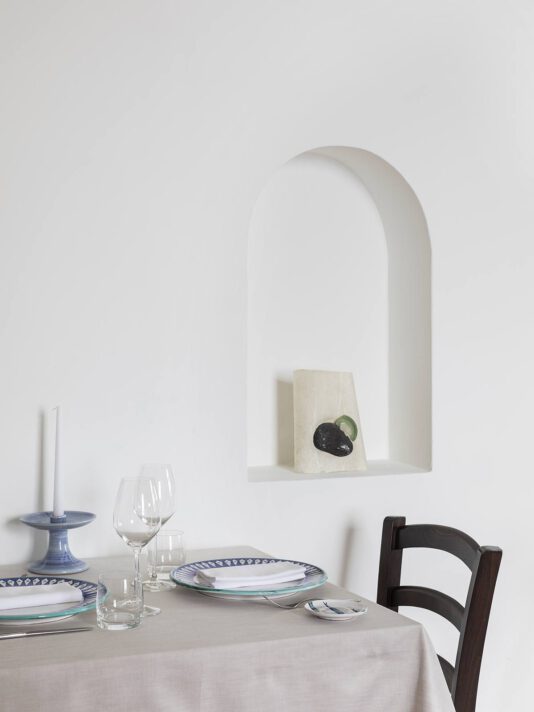
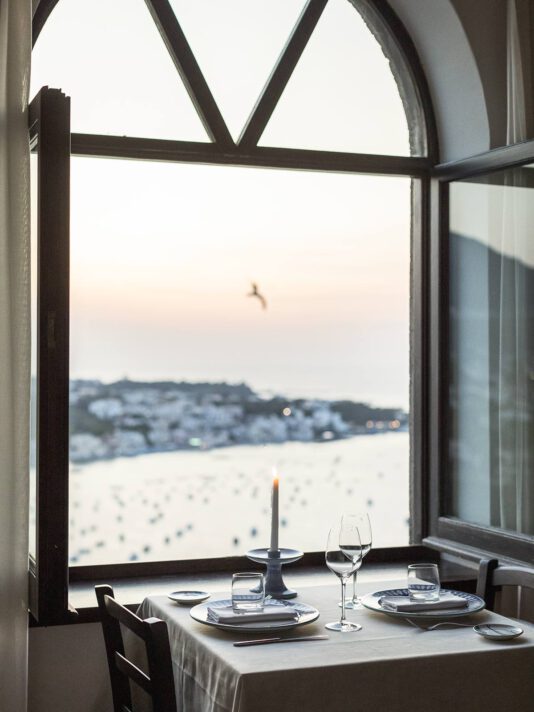
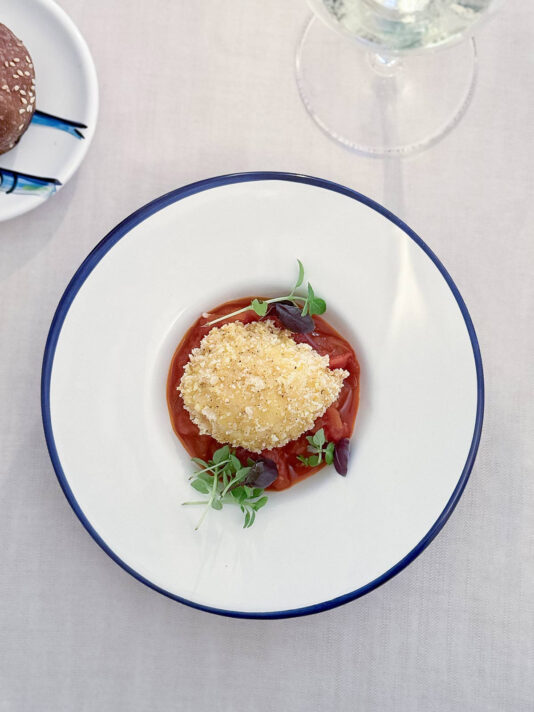
For lunch, there is the museum’s café, about 50 meters from the hotel. But dinner is where the experience truly shines. One evening, we had the five-course tasting menu of Neapolitan-inspired dishes: a delicate fish carpaccio, a perfectly poached egg in a divine tomato sauce and, the standout, the house signature, spaghetti with pine nuts, raisins and mint. Many of the ingredients come from the garden behind the hotel, so during the day you are, in effect, strolling through your dinner menu.
We paired it with a bottle of Castello, the estate’s own white wine, made from the vines beside the garden. At 50 euros a bottle, it feels like a gift.
The Convent
In the afternoon, Cristina gave us a short tour. By day, the castle is a public museum, so in summer you will see small groups wandering the ancient alleys, always kept separate from the hotel. Her parents began restoring parts of the complex in the 1970s, slowly uncovering its long, layered history. Some rooms hold remarkable, at times haunting traces of the past, including stories of the strict rituals the nuns once observed.
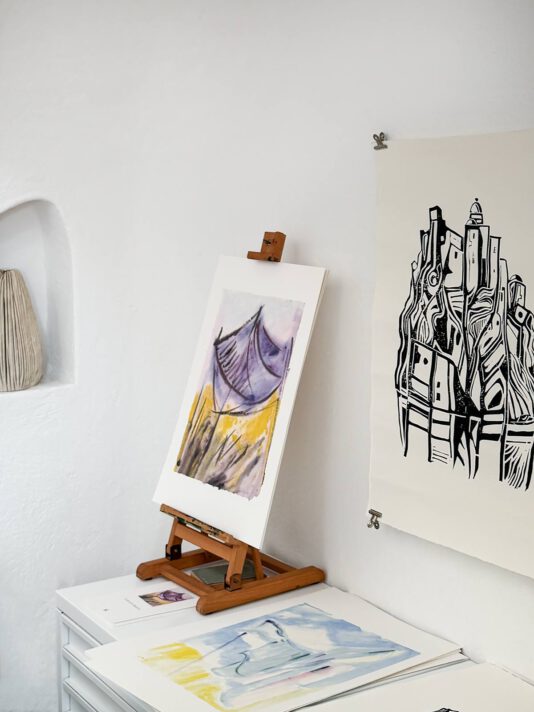
Cristina’s parents were also the first to welcome guests, back when things were very basic: Visitors were handed a bedsheet and a candle, since there was no electricity. Her father, Gabriele Mattera, turned a patio into a studio, where he painted many of the striking works now hanging in the hallways. The studio has since become a small gallery shop, and Cristina looks after her father’s legacy through the association Amici di Gabriele Mattera.
One of the most beautiful moments comes at dusk, when you walk back across to the main island and the setting sun bathes the castle’s warm, sandy stone in golden light.
Ideal for
Art and culture lovers who appreciate something rare and meaningful in a setting like this. The hotel is not suitable for children.
Prices
Singles from around 160 euros, doubles about 240 to 340 euros, Suite No. 8 around 450 euros and the Altana apartment (for four) around 500 to 600 euros per night, all including breakfast. Prices vary by season. You can check availability here.
Season
The hotel is open from April 18 to November 10.
Booking & Contact
Il Monastero
Castello Aragonese d’Ischia
80077 Ischia (NA)
Italy