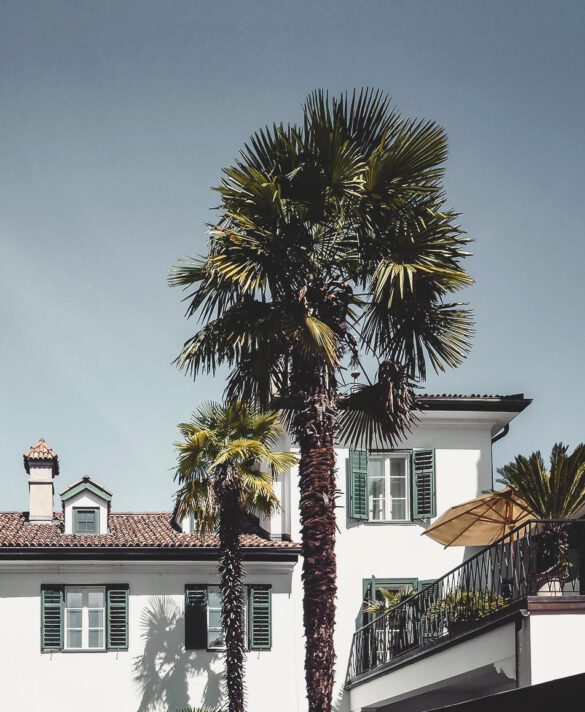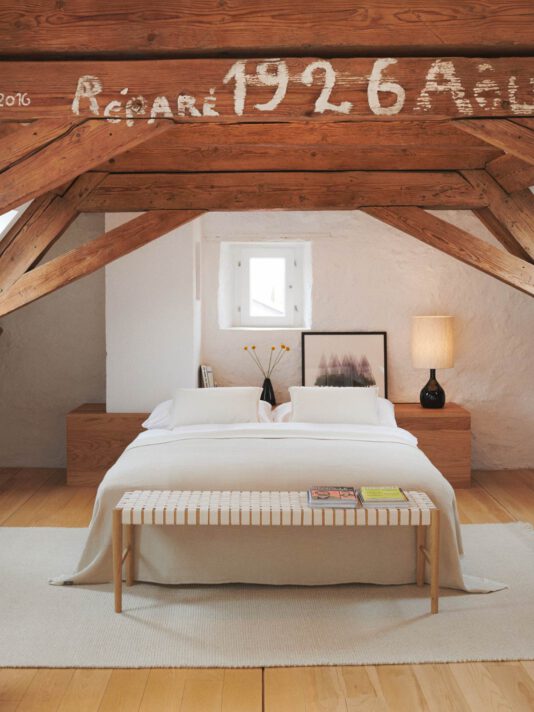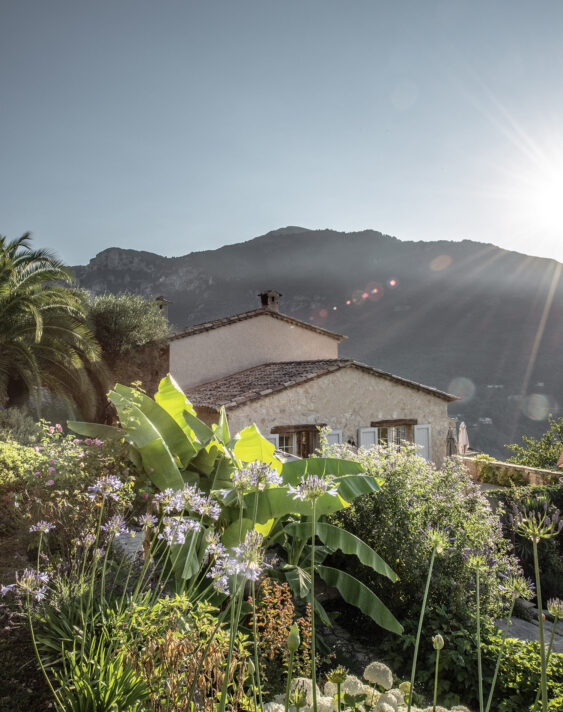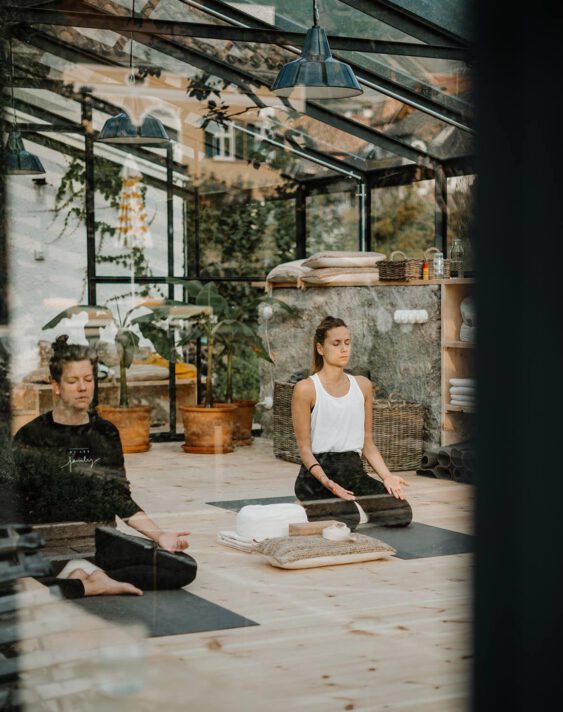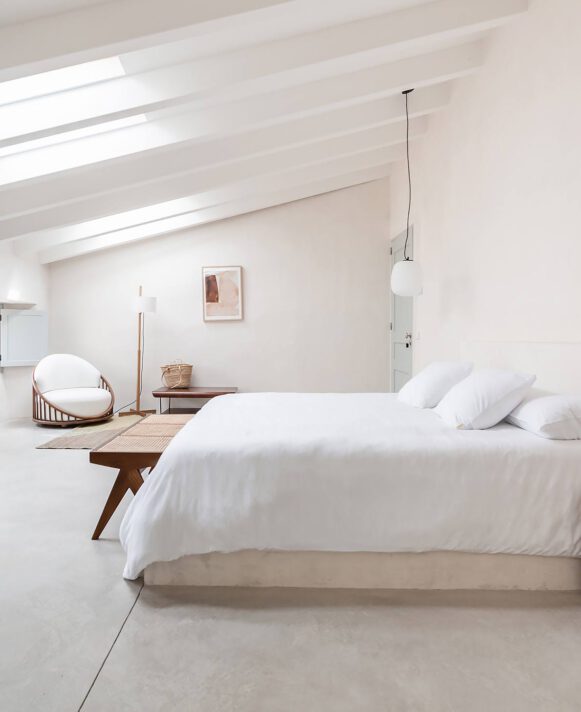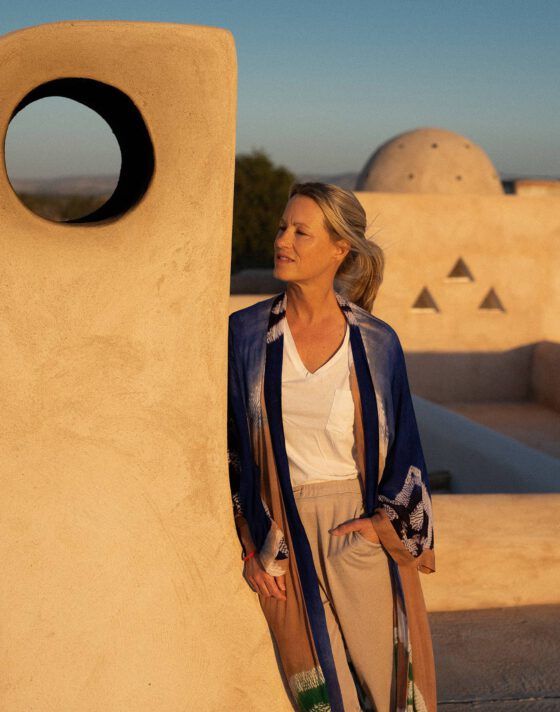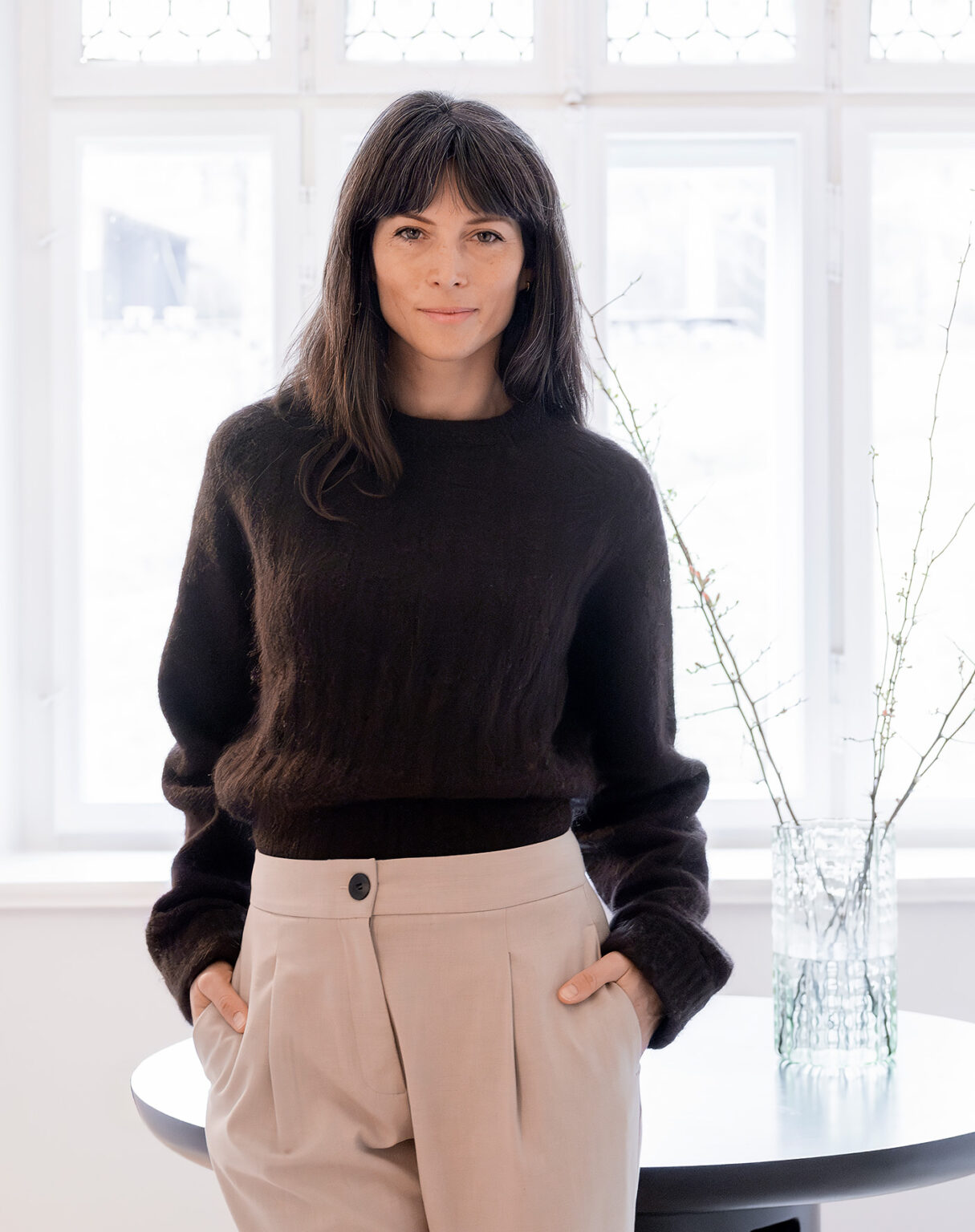
We meet Veronika Weiss at the bar of the Blyb. hotel on Lake Tegernsee. Her task was to turn the historic villa from 1892 into a hotel: not one of the typical Tegernsee luxury hotels, but a young, modern place with a cool restaurant, a sauna house and a boules court in the garden.
In the inviting bar, you quickly get a sense of the new crowd: Two Berliners are lounging on the sofa with their MacBooks. A bartender mixes a drink for a young couple in beanies. A mix of singer-songwriter and jazz plays in the background.
Veronika lives around the corner from the hotel. She grew up in nearby Bad Tölz and has known Lake Tegernsee since she was a child.
Before we talk about designing hotels: What is so special about living, and vacationing, on Lake Tegernsee?
I think everyone who lives here would admit: As far as quality of life goes, you can hardly do better. Everything is close by. The lake, the mountains, even large ski resorts in Austria are only an hour away. And you can reach Munich quickly by train. After work we often go swimming or for a hike. Or both. Honestly, what’s not to like? And for vacationers, the possibilities are endless, with so many beautiful mountain hikes and huts to choose from.
Can you share a true locals’ tip?
Hm. There’s a mountain tour to the Holzeralm. The mountain hut burned down a long time ago, but it’s also the name of the mountain. On those typical summer days when half of Munich crowds onto the Neureuth, you’ll see only a few people up there, and the views are great. Another tip: On Fridays and Saturdays, the Boarhof in Holz serves breakfast with home-baked bread and homegrown fruit and vegetables. That’s the old-school Tegernsee vibe.
How did you get into architecture?
I actually started studying art history in Munich, but then very quickly moved to Innsbruck and enrolled in architecture there. I just couldn’t live without the mountains. But I also traveled a lot during my studies and was able to work for a renowned architect in Mexico City for a year.
Mexico. Sounds exciting…
It was very enriching for a small-town girl like me to live in one of the biggest cities in the world. But the people in Mexico are incredibly warm and open-minded. And there is a lot less bureaucracy when it comes to building a house. You definitely have more creative freedom and can develop lots of simple and beautiful details.
After a few years in an office on Lake Tegernsee and at BAND Architekten in Munich and Berlin, I started my own business in 2021.


What’s your favorite part of architecture?
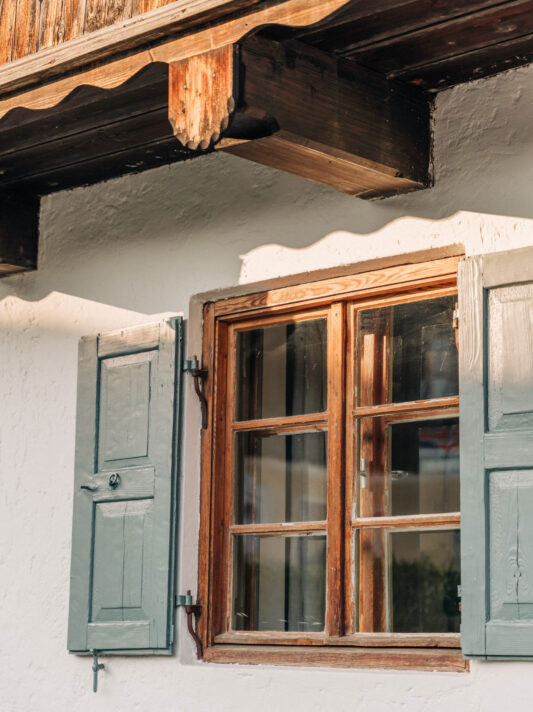
I have a soft spot for historic buildings. With the Archive for Architecture in Innsbruck, I conceived and wrote the Innsbruck architecture guide, and over the last 12 years I have specialized more and more in converting existing buildings. Not only because of the stories lurking between the old beams, but also because it is more sustainable. In Germany, for instance, the building sector is responsible for around 40 percent of carbon emissions. New buildings often seal off green spaces, further reducing biodiversity. The continued use and conversion of existing buildings is a sensible idea to protect our environment and keep it livable.
Nevertheless, it is often more strenuous to preserve a historic house…
Absolutely. Things that are invisible to guests, like soundproofing, fire safety, energy upgrades and plumbing, are never easy to solve. With a new building, you can plan a lot of things better in advance. But sometimes there are also positive aspects: In the Blyb. villa, we found high-quality, well-preserved parquet and natural stone floors beneath layers of carpet and vinyl, and uncovered them.
What was the biggest challenge of the Blyb. project?
We had relatively little time and little money. That’s the best and the worst thing at the same time. We were forced to make quick decisions, find pragmatic solutions and get our hands dirty. That’s only possible with a lot of motivation, teamwork and trust. Thankfully, the operators, planners and craftspeople were all on the same page. (Our note: Marie Eham, the daughter of the Pretty Hôteliers Jenny and Andreas Eham from the neighboring Hotel Haltmair in Rottach-Egern, planned the outdoor facilities, the greenhouse and the sauna house, for example). Friends often joined us on the weekends and together we built wooden decks and assembled furniture. We’ve all known each other for a very long time and are also friends in our private lives. That doesn’t always have to be a good thing. But it was a great advantage here because everyone had the dream that this hotel, which is certainly atypical for Lake Tegernsee, would become a reality. In the end, it’s always the people who make the difference.
Many hotels go wrong with colors. What advice would you give those who want to do it themselves?
First of all, look at the entire room. What color are the floor, walls and ceiling? And what surface texture? A cushion should not be a highlight of the room, it should emphasize the qualities of the room. For example, pick up existing colors in different shades. If the walls are smooth, I like to use fabrics with more texture and vice versa. This creates a balance for the senses. Tone on tone always works well. Wild mixes of patterns and colors take a lot of experience to pull off.
How do you get positive energy into a hotel room?
I always think you need a good foundation: high-quality natural materials, good lighting and good acoustics, with soft surfaces so it doesn’t echo.
Lighting is often tricky. As a rule, choose a color temperature of no more than 2,700 kelvin for cozy lounges. Dimmable lights can be used to adapt the atmosphere to the time of day. Another trick is to have different light sources such as table lamps, floor lamps and indirect lighting in a room to create different moods.
The human eye needs variety and different elements to be stimulated. On the other hand, chaos must be avoided so that people don’t lose their bearings. This can be achieved by zoning parts of the room. For example, a rug, sofa, lamp and table that form an island. Or a sideboard, picture, table lamp and vase. When arranging, you should always look at the overall composition.
In a hotel, care also matters: Is the room looked after, is it kept clean, are the things in it always arranged lovingly and with a fresh look? Perhaps there are fresh flowers or beautiful music that matches the time of day and mood. That is what you perceive positively.
What was your most “interesting” hotel experience?
I keep going back to a small B&B in the Algarve. One of the rooms I slept in was painted fire engine red, others were bright yellow or orange, and the furniture was put together quite randomly. The tiles in the shared bathrooms are wildly colorful. It’s pretty much the exact opposite of what I personally like on vacation. But it’s cheap and clean, and the owners conjure up the best breakfast with fresh orange juice and homemade cakes. Honestly, I like that the rooms provoke me like that. Not everyone has the same taste, and that’s okay. And not everyone has the ambition, the time or the financial means, and that’s okay too. And when you’re met with a lot of hospitality and warmth, it’s a nicer experience than staying in a perfectly designed hotel room.
Do you have a personal hotel recommendation, one we haven’t discovered yet?
The Villa Verdin on Lake Millstatt in Carinthia, Austria. It’s an old house with the typical Austrian charm, somewhere between artistic bohemia and dusty tourist resort. The hotel has been refurbished on a shoestring (again, the walls in some rooms are a little too colorful) and furnished with vintage furniture. You can enjoy their excellent cuisine and a great selection of Austrian wines, direct access to the lake and a slightly quirky atmosphere that is really fun.
Thank you, Veronika.
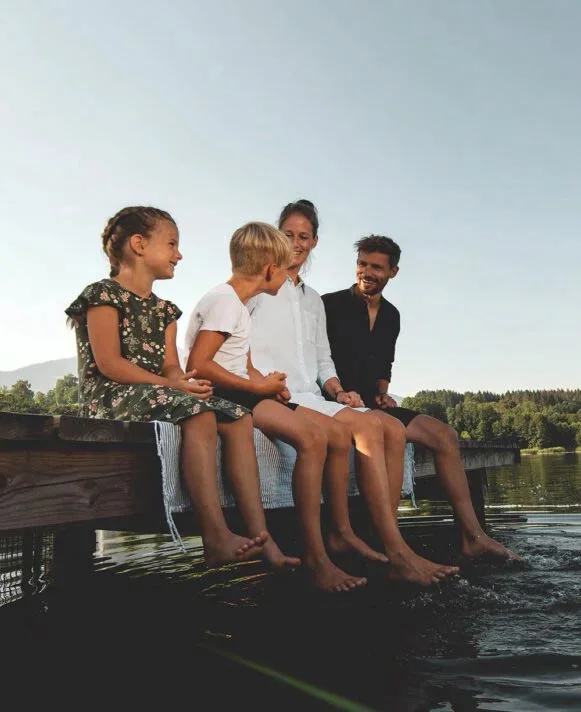
You can contact Veronika Weiss through her website www.veronikaweiss.studio or by email at veronika@veronikaweiss.studio. Our review of the Pretty Hôtels member Blyb. is here. A visit is highly recommended. The lovely portrait was taken at Blyb. by Philippe Arlt (www.philippearlt.de).
© Pretty Hôtels